Custom Piling Machines, Factory Direct
Custom Piling Machines, Factory Direct


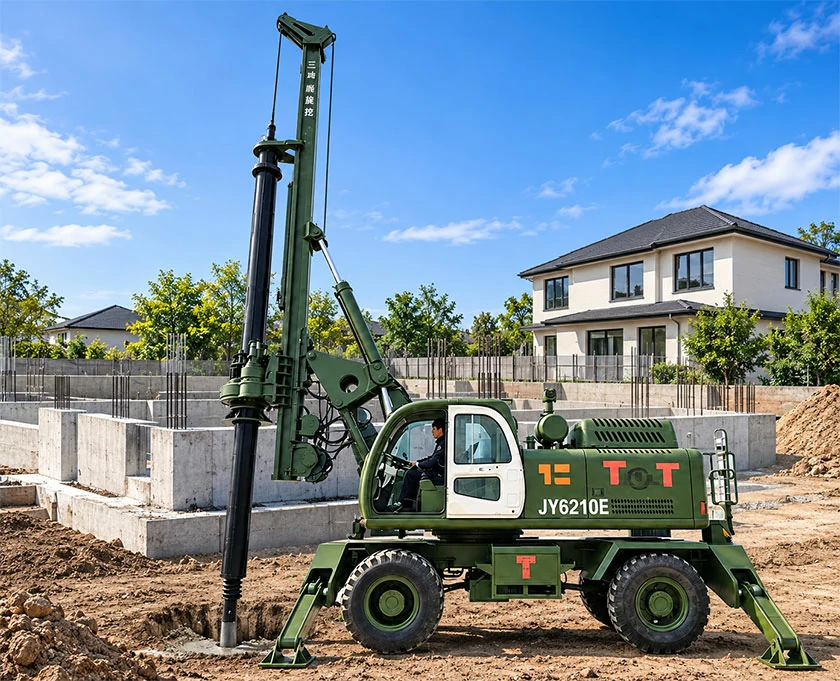
Concrete piles are long columns of reinforced concrete that carry a house’s load down to firm ground when the soil near the surface cannot support it. This guide explains when a house needs a pile foundation, the difference between precast and cast-in-place concrete piles, how bored piles are built, and how to match a rig to the job.
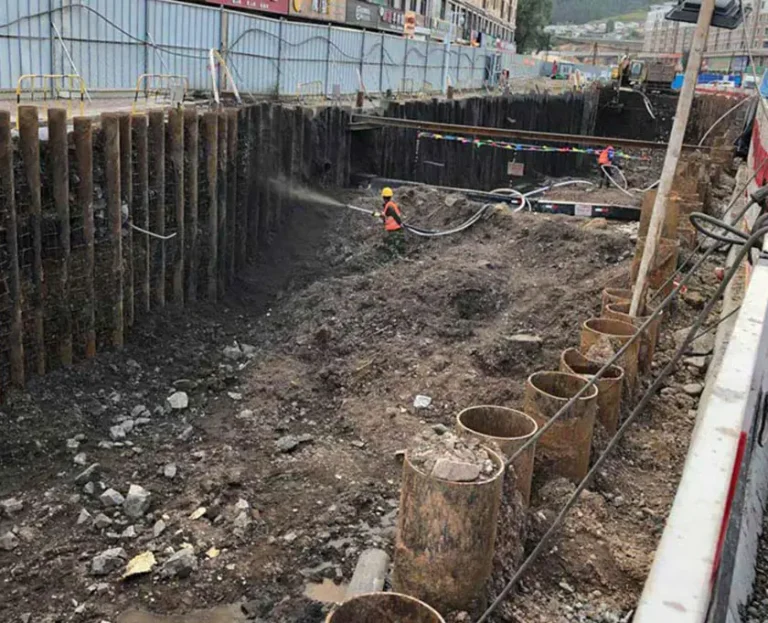
A residential pile foundation is a group of piles, tied together at the top by a pile cap or grade beams, that carries the house through weak ground to a firmer layer. Houses usually need piles on filled ground, soft or shrinking clay, sites with a high water table, or slopes. Concrete piles are either precast and driven, or cast in place in a drilled hole. Bored cast-in-place piles make little vibration and can be drilled through obstructions. The pile type, diameter and depth are set by the engineer from a geotechnical survey.
A pile foundation for a house is needed when the soil under a normal strip or slab foundation cannot carry the building safely. Piles reach past the weak surface layer to firmer soil or rock, so the house does not settle unevenly.
Not every house needs piles. Where the surface soil is firm and level, a strip or slab foundation is usually simpler. The decision belongs to the project engineer, and it starts with a geotechnical survey. That survey gives the soil layers, bearing capacity and water level, and the engineer then works out how much load each pile can safely carry.
Concrete piles come in two groups: precast piles, made in a factory and installed whole, and cast-in-place piles, formed in the ground. Both carry load, but they are installed and equipped very differently.
| Type | How it is made | How it goes in | Points to weigh |
|---|---|---|---|
| Precast concrete pile | Cast and cured off site, reinforced or prestressed | Driven or pushed into the ground | Fixed lengths, so cutting or splicing is needed; noise and vibration from driving |
| Bored cast-in-place pile | A hole is drilled, a cage is lowered in, and concrete is placed | Rotary rig drills the hole | Length can follow the ground; low vibration; spoil must be handled |
| Continuous flight auger (CFA) pile | A hollow-stem auger drills, and concrete is pumped as it is withdrawn | Needs a CFA rig, which is a different machine | Fast in suitable soil; less suited to hard layers and obstructions |
| Driven cast-in-place pile | A steel tube is driven, then filled with concrete | Hammered casing | Noise and vibration from driving |
This guide concentrates on bored cast-in-place piles, because they are made with rotary rigs. For the full list of pile systems, see our guide to the types of piling.
A residential pile foundation is a complete system, not only the piles. The load path runs from the building to a pile cap or grade beam, down the piles, and into the soil.
The pile cap is a reinforced concrete beam or block that sits at or just below ground level and ties the pile heads together. It spreads the weight of the walls across several piles, and it stops single piles from carrying uneven loads. The ground floor slab is often cast on the beams over a small void, so it does not rest on soil that may settle.
Each pile passes its share of the load to the ground in two ways: shaft resistance along its sides, and toe resistance at its base. Most house piles use both. Which one dominates depends on the soil layers the survey finds.
In the United States, IBC Chapter 18 on soils and foundations sets criteria for selecting, designing and installing foundations, including piles and pile caps. Other countries have their own codes, so always check the rules that apply to your site.
Bored concrete piles are built by drilling the hole first and forming the pile in it. The sequence below is general practice, and the project specification comes first.
The hole is the part the rig controls. A straight hole of the right diameter and depth, with a clean base, makes the cage and concrete work far easier.
The right pile type depends on the ground, the loads and the site, and no single type suits every house. The table compares the main options for small buildings.
| Pile type | Noise and vibration | Spoil | Site fit |
|---|---|---|---|
| Bored cast-in-place | Low vibration from drilling, with engine noise from the rig | Soil comes out of the hole and must be removed | Mixed ground and obstructions; sites near existing buildings |
| Driven precast concrete | High, from hammering or pushing | Little, because soil is displaced | Open sites with room for piles and a driving rig |
| CFA | Low to moderate | Soil comes out with the auger | Soft to medium ground that allows the auger to advance |
| Screw piles (also called helical piles) | Low | Little or none | Light structures and small-diameter piles |
| Micropiles | Low to moderate | Small amount of soil from a small hole | Tight access, and underpinning existing buildings |
Pile diameter and depth come from the engineer’s design, not from the rig. The design takes the building load, the soil layers and the safety factor, and it returns a pile diameter, a minimum length and a number of piles.
The rig’s job is to deliver that hole. Compare the design diameter and depth with the rig’s rated range, and remember that rated depth is a maximum. Actual depth depends on the kelly bar configuration and the ground. A hole that is smaller than the rig’s minimum diameter, or deeper than its depth rating, needs a different machine.
Pile diameters for houses vary widely. Small single houses can use piles narrower than 400 mm, and larger residential blocks and light commercial buildings use bigger ones. Check the design diameter before you look at a rig.
Piling near neighbors is mostly a question of vibration, noise, spoil and access. Each factor can rule a method in or out before the soil is even considered.
| Factor | What to check | Why it matters |
|---|---|---|
| Vibration | Distance to existing buildings and buried services | Driving can shake neighboring structures, while drilling produces much less |
| Noise | Local working hours and noise limits | Rig engines and hammers both make noise, but hammers make more |
| Spoil and slurry | Where soil and drilling fluid will be stored and removed | Bored methods bring soil out, and wet spoil needs space and a disposal route |
| Access | Gate width, overhead lines, turning space, road limits | Transport size and weight decide whether the rig reaches the site |
| Ground bearing | Working platform strength | A rig on soft ground can tilt, which is unsafe and spoils the hole |
| Underground services | Utility locates before any drilling | Striking a pipe or cable is dangerous |
Tengzhou Kaiao Construction Machinery Co., Ltd. builds two crawler-based rig lines that suit smaller bored piles. The table shows their rated ranges and transport sizes. These are maximum rated values, and transport size is not working height.
| Rig line | Hole dia. / depth | Torque | Weight | Transport size |
|---|---|---|---|---|
| Square kelly bar crawler rigs | 400–1800 mm / 20–25 m | 42–55 kN·m | 13–18.5 t | WD-25: 11×2.4×3 m; KA-20: 10×1.6×2.9 m |
| Excavator-based small rigs | Φ1200–1600 mm / 10–20 m | 50–90 kN·m | 9.6–13.5 t | KA-60: 4100×1920–2025×3350–3450 mm; KA-75: 7800×2220–2340×3200 mm |
The pile drilling machine page covers the square kelly bar crawler rigs, and one model has a telescopic undercarriage for transport and narrow sites. The excavator piling rig page covers small rigs built on production excavator chassis. The wider range is under rotary drilling rig.
These rigs suit apartment blocks, townhouse rows and light commercial buildings. They drill 400 mm holes and larger, so a single small house with piles under 400 mm is better served by micropile or screw pile equipment, which we do not offer for this use.
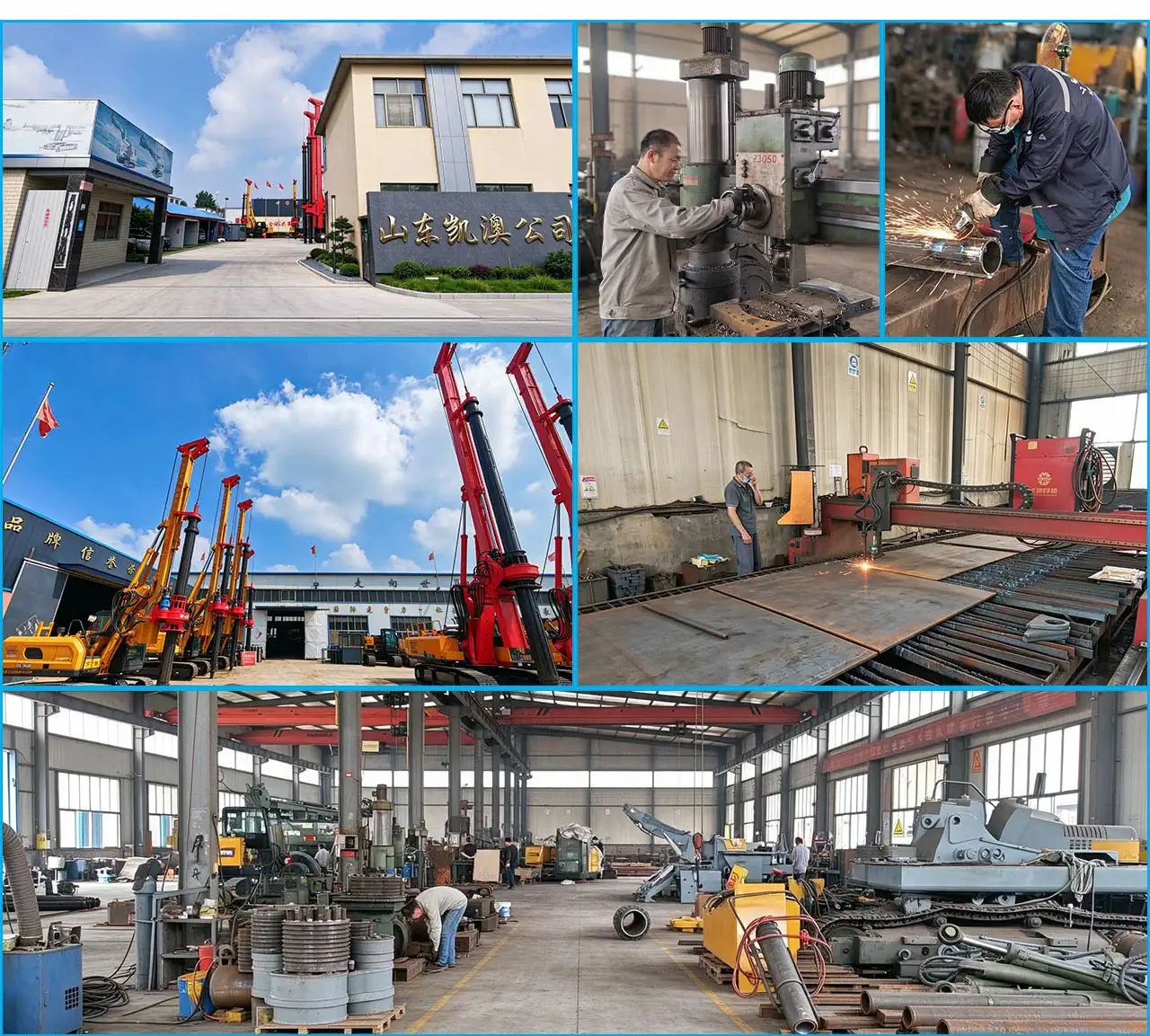

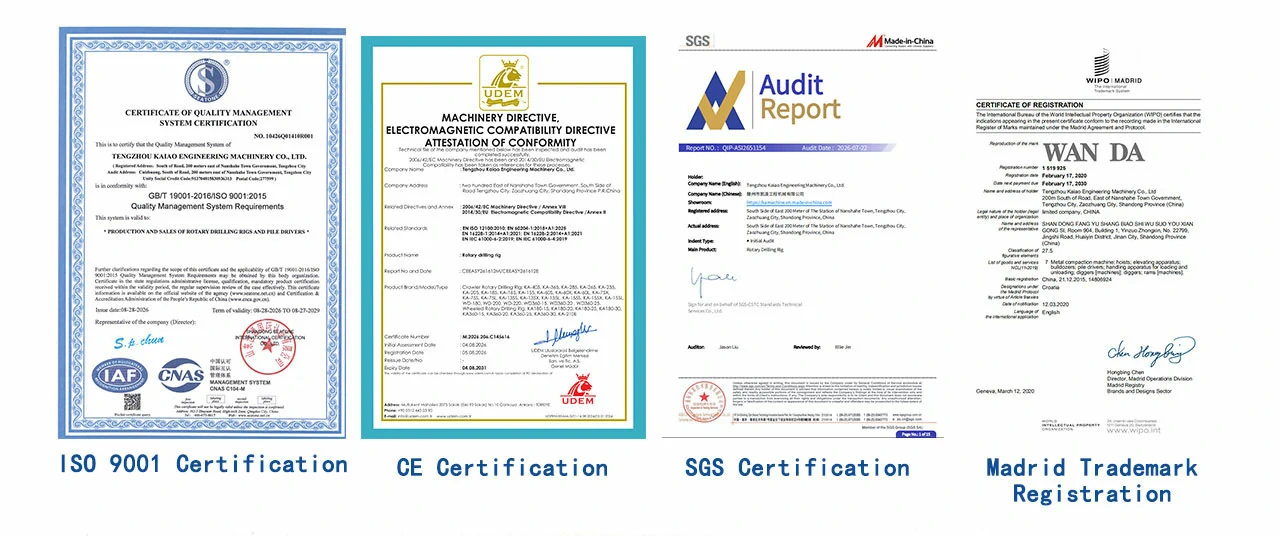

Learn more about Kaiao.
The words pile, piling and pier overlap in everyday use. A pile is usually a long, slender foundation element, and a pier is generally a larger-diameter column, often formed by drilling a hole and filling it with reinforced concrete. Terms vary by region and by code, so rely on the wording in the project drawings.
You get a better rig recommendation when you send the pile design and the site details together. The table lists what to prepare and the problems it avoids.
| Send this | Problem it avoids |
|---|---|
| Pile diameter and depth from the design | A rig that cannot drill the hole |
| Geotechnical report or soil description | A tool or method that does not suit the ground |
| Groundwater level | Caving holes and unplanned slurry or casing needs |
| Site photos and access dimensions | A rig that cannot reach or fit on the site |
| Number of piles and working area | Poor planning of spoil and concrete deliveries |
| Destination country and port | Transport and compliance surprises |
Pile problems usually start before drilling: unknown fill, uncleared services, soft platforms and wrong diameters. Checking these early is far easier than stopping a rig halfway through a hole.
Concrete piles are long reinforced concrete columns that carry a building’s load down to firm soil or rock. They are either precast in a factory and driven into the ground, or cast in place in a drilled hole. They are tied together at the top by a pile cap or grade beams.
A house needs a pile foundation when the soil near the surface cannot carry it safely. Typical cases are filled ground, soft or shrinking clay, a high water table, sloping sites and heavy buildings. A geotechnical survey and the project engineer decide whether piles are needed.
Precast piles are made and cured in a factory and then driven or pushed into the ground, while cast-in-place piles are formed in a drilled hole. Precast piles have fixed lengths and make driving noise. Bored cast-in-place piles can follow the ground and make little vibration, but they produce spoil.
A residential pile foundation is made of piles, a pile cap or grade beams that tie them together, and a floor slab or beams above. The piles carry the load into the ground. The cap spreads the weight of the walls across the piles, so no single pile is overloaded.
Pile depth for a house depends on where the firm layer lies, and the engineer sets it from the geotechnical survey. There is no standard depth. The rig’s rated depth is a maximum, and the actual depth also depends on the kelly bar configuration and the ground.
Bored piles are often chosen near existing buildings because drilling makes much less vibration than driving. They still make rig noise and bring soil and sometimes slurry out of the hole. Check noise limits, spoil handling and access before you choose the method.
Our square kelly bar crawler rigs drill holes from 400 to 1800 mm, and our excavator-based small rigs drill Φ1200–1600 mm. These are rated values. Piles narrower than 400 mm need other equipment, such as micropile or screw pile machines.
Neither type is better in every case. Screw piles are rotated in with little spoil and suit light structures and small diameters. Concrete piles can be formed in larger diameters and carry heavier loads. The engineer chooses from the soil data, the loads and the site.
Send the pile diameter and depth from the design, the ground conditions, the groundwater level, site access dimensions and the project destination. With those details, Kaiao can tell you honestly which machine fits. A geotechnical report and site photos make the recommendation more accurate.
Planning bored piles for a house or building? Send us the pile diameter and depth, ground conditions, groundwater level, site access and destination, and we will tell you honestly which rig fits.
Scan with WeChat. On a phone, save the image and scan it from your album.
Send us your project details and we will reply with a recommendation and a quotation.
Send an Email