
Custom Piling Machines, Factory Direct
Custom Piling Machines, Factory Direct


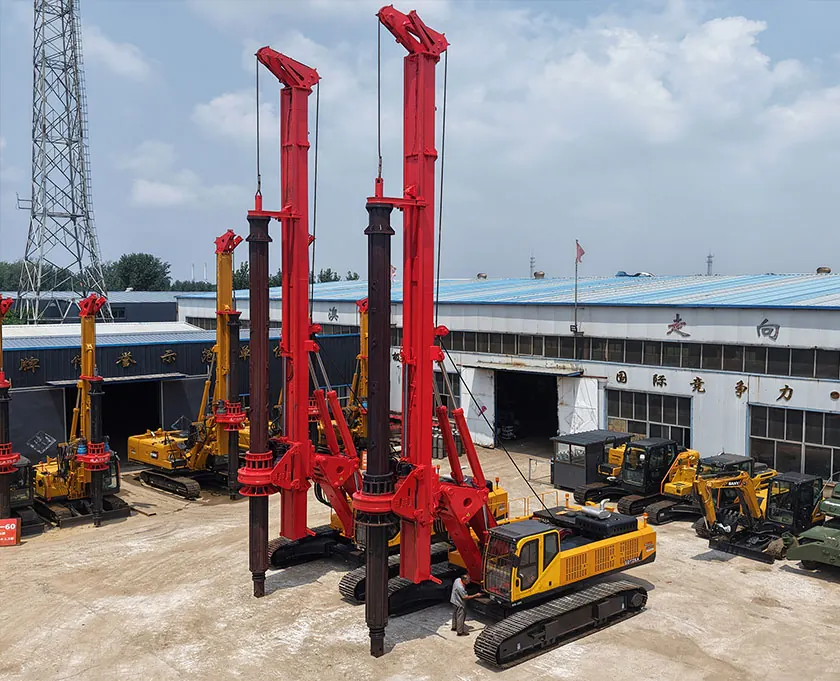
A kelly bar is the telescopic steel bar that connects a rotary rig’s rotary head to its drilling tool, passing rotary torque and downward crowd force to the tool as it bores a pile hole. This guide explains what a kelly bar is, its parts, how it works, the main types, and how to choose and inspect one.
A kelly bar is a telescopic bar, usually made of two to five nested steel tubes, that carries the drilling tool of a rotary piling rig and transmits torque and crowd force to it. There are two main types. An interlocking kelly bar has drive keys and mechanical locks between the sections and transmits more crowd force, so it is common in harder ground. A friction kelly bar is generally quicker to operate in soft soil. The depth a rig can reach depends on the bar, the mast, the winch and the tool together.
A kelly bar is the long, telescopic drive rod on a hydraulic rotary piling rig. The rotary head turns it, and the drilling tool hangs from its lower end. It does three jobs: it passes rotary torque to the tool, it passes crowd force (the downward push) to the tool, and it lets the rig lift the loaded tool out of the hole.
You may also see it called a kelly joint. In foundation work, a rig that drills with one is often called a kelly rig, or a kelly bar drill rig. The bar is the part that lets a bucket or auger reach deep holes while the mast stays at a practical height.
Do not confuse it with the kelly on an oil or gas rig. Oil and gas rigs also use a part called a kelly, which is a square or hexagonal pipe turned by a bushing in a rotary table. That part is a different piece of equipment. This guide covers the kelly bar used on foundation drilling rigs for bored piles.
A kelly bar is made of several nested steel tubes plus the fittings that connect it to the rig and the tool. The table lists the parts you will meet on most designs.
| Part | What it does |
|---|---|
| Outer bar | The largest tube. Its outside surface engages the rotary head, which turns it and pushes or pulls it along the mast |
| Intermediate bars | Tubes that slide inside the outer bar and extend in turn as the hole gets deeper |
| Inner bar | The smallest tube. It hangs from the main winch rope and carries the drilling tool at its lower end |
| Drive keys and lock recesses | Ribs and pockets that pass torque, and on interlocking bars crowd force, from one section to the next |
| Top connection and swivel | The fitting at the top that joins the inner bar to the winch rope and lets the bar rotate |
| Shock absorbers | Springs at the top or bottom of the bar that soften the impact when sections reach the end of their travel |
| Kelly stub | The square drive end at the bottom that takes the drilling tool |
A kelly bar adapter changes the connection size or type between the kelly stub and a drilling tool, so one bar can carry tools with different connections. The stub and the tool connection must match, and the bar must also match the drive sleeve of the rotary head. Check both before buying a bar or a tool. The square stub is only the tool connection, and it is not the same thing as a square kelly bar.
A kelly bar works by letting the rotary head turn and push the tool while a winch rope lifts it. The sequence repeats for every bucket of soil.
The sections must lock together to pass crowd force and unlock to slide. Good lock alignment and clean sliding surfaces are what keep the cycle quick.
The two main types of kelly bars are friction bars and interlocking bars, and they differ in how the sections pass force to each other. Both are telescopic, so telescopic is a feature of the design, not a separate type.
| Factor | Friction kelly bar | Interlocking bar |
|---|---|---|
| How sections pass force | Through frictional contact between the rails of each section | Through drive keys and mechanical locks between the sections |
| Crowd force | Lower | Higher, because the locks carry the push |
| Typical ground | Soft soil | Harder ground |
| Operation | Generally quicker to operate in soft soil | Locks must be aligned each time, which takes a little more care |
| Used on | Rigs that work mainly in soft ground | Rigs that must push hard into dense layers |
A friction kelly bar transmits torque through contact between the rails of its sections, without mechanical locks. It is generally quicker to operate in soft soil because the sections do not need to be aligned and locked. It carries less crowd force than an interlocking bar, so it suits ground that does not need a hard push.
An interlocking bar has drive ribs welded to each section and a lock device between them, so torque and crowd force pass through steel stops instead of friction. It transmits more crowd force, which is why it is commonly used in harder ground. The trade-off is that the locks need to be aligned and checked.
Some compact crawler rigs use a square kelly bar. Naming for this type varies between manufacturers, and we use the term square kelly bar. Its rated depth, torque and hole size depend on the rig, so check the rig’s specification rather than assuming figures from another bar.
A kelly bar carries simple mechanical ground-working tools that remove soil or rock. The tool is chosen to suit the ground, not the bar.
The tool is fixed to the kelly stub, either directly or through an adapter. Tools that need compressed air, fluid or data lines need extra supply lines along the bar, so they are not a simple swap.
The depth a kelly bar can reach depends on its number of sections and length, the mast height, the winch capacity and rope length, the drilling tool and the rig itself. No single depth applies to every bar. Quoted depths are maximum rated values, and actual depth also depends on the ground and the bar configuration.
Typical telescopic bars have two to five sections. More sections let the bar reach deeper from the same mast, but they add weight and more locks to maintain. Always ask for the depth rating of the complete rig and bar, not the bar alone.
You choose a kelly bar by matching it to the rig first and the ground second. A bar that does not fit the rotary head, or that exceeds the rig’s ratings, should not be considered.
| What to check | Why it matters |
|---|---|
| Rotary head interface | The outer bar must fit the drive sleeve of the rotary head |
| Rated torque and crowd force | The bar must handle at least the rig’s torque and crowd, or it becomes the weak link |
| Target depth and mast height | Decides how many sections and what length the bar needs |
| Winch capacity | The winch lifts the bar and a full bucket together |
| Ground type | Hard layers point to an interlocking bar, soft soil to a friction bar |
| Kelly stub and tool connection | The tool and any adapter must fit the stub |
| Steel and welds | Ask for the manufacturer’s data on material and weld inspection instead of relying on general claims |
| Spare parts and service | Drive keys, springs and stubs wear, so check they can be replaced |
Treat claims such as “high-grade steel” or a wide depth range with caution unless they come with data for your rig. Ask for the rated torque, crowd force, section count and length in writing.
A kelly bar wears at its keys, locks and stub, and it should be inspected before work starts. Interlocking bars can unlock unexpectedly, and the locks can be hard to align as wear builds up.
| Sign | What to check |
|---|---|
| Sections slide roughly or stick | Rails, drive keys and sliding surfaces for wear, dirt or damage |
| Locks do not engage cleanly | Lock recesses and keys for wear or deformation |
| Bar unlocks during drilling | Lock condition and alignment before the next shift |
| The hole drifts off line | Bar straightness, and whether the mast is plumb |
| Cracks near welds or the top connection | Welds, flange and swivel, and stop work if you find cracks |
| Tool does not seat on the stub | Stub wear, adapter fit and tool connection |
| Hard knocks at the end of travel | Shock absorber springs |
Note: Check that the mast is plumb before the first cut. A tilted mast starts the hole off line, and the error grows with depth.
The FHWA drilled shaft manual covers drilled shaft construction means and methods if you want the engineering view.
Tengzhou Kaiao Construction Machinery Co., Ltd. builds rotary rigs that drill with an interlocking or a square kelly bar, depending on the model. The table shows the rated ranges on two of our crawler rigs. Each rig’s bar is matched to its own torque and depth, so values from one rig do not apply to another.
| Rig | Hole dia. / depth | Torque | Weight |
|---|---|---|---|
| Interlocking bar, crawler type | Φ1500–2200 mm / 15–35 m | 70–170 kN·m | 23–33 t |
| Square kelly bar, crawler type | Φ400–1800 mm / 20–25 m | 42–55 kN·m | 13–18.5 t |
See the kelly bar drill rig page for the interlocking version and the pile drilling machine page for the square kelly bar version. The wider range is under rotary drilling rig. Rated depth is a maximum, and the real depth depends on the bar configuration and the ground.
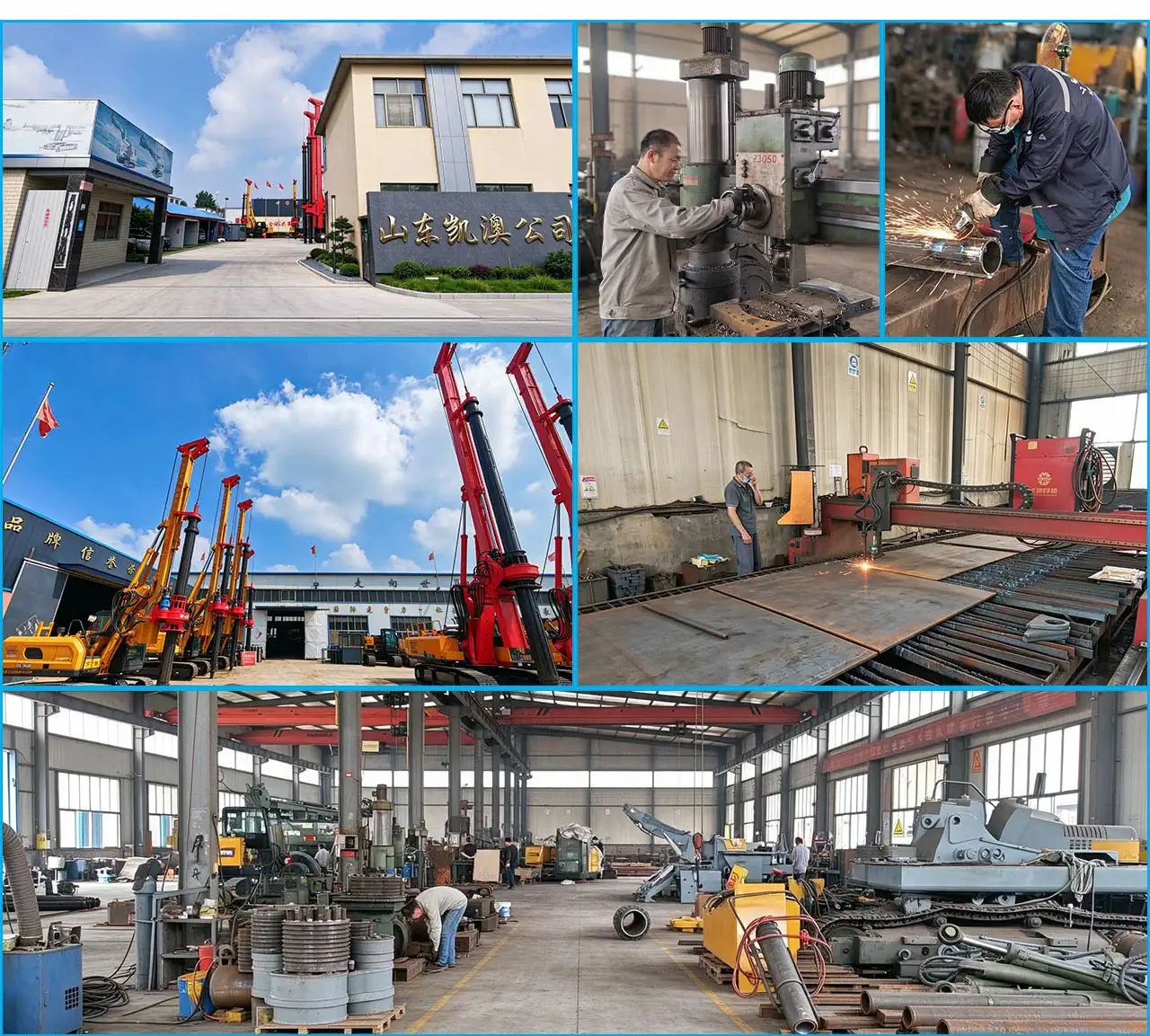

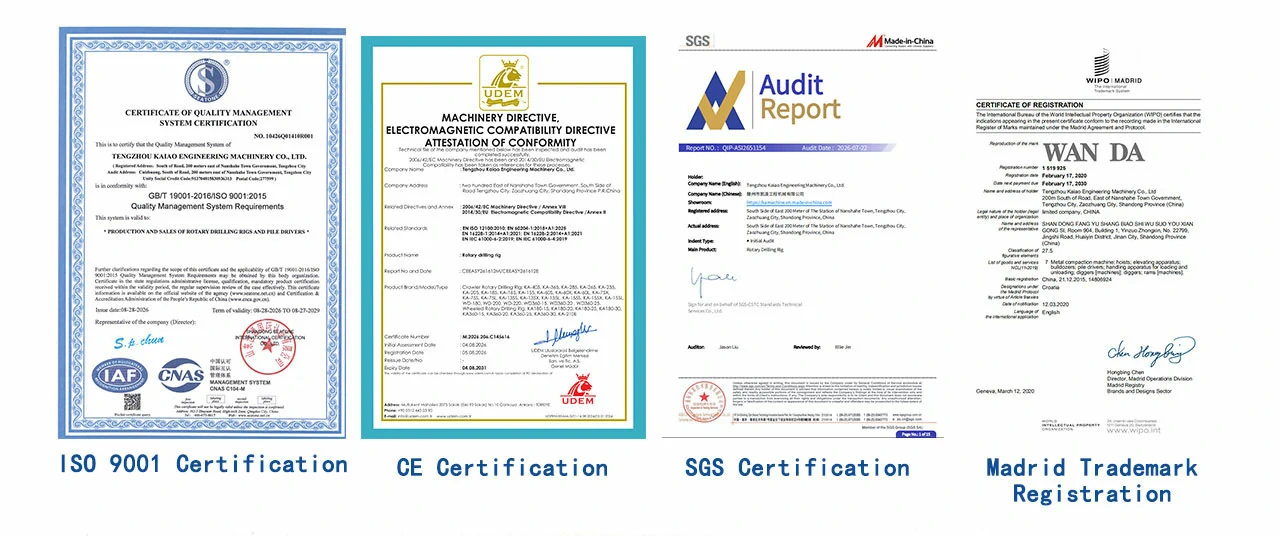

Learn more about Kaiao.
A kelly bar is the telescopic steel bar on a rotary piling rig that connects the rotary head to the drilling tool. It passes rotary torque and downward crowd force to the tool and lets the winch lift the loaded tool out of the hole. It usually has two to five nested sections.
A kelly bar transmits torque and crowd force from the rotary head to the drilling tool, and it telescopes so the tool can reach depths beyond the mast height. The rotary head turns and pushes the outer bar, while the main winch rope lifts the inner bar and the tool.
A friction kelly bar passes force through contact between the section rails, while an interlocking bar uses drive keys and mechanical locks. Interlocking bars transmit more crowd force and are commonly used in harder ground. Friction bars are generally quicker to operate in soft soil.
Telescopic kelly bars typically have two to five sections. The number depends on the rig, the mast height and the depth the bar must reach. More sections reach deeper from the same mast but add weight and more locks to inspect and maintain.
No, the kelly bar on a foundation rig is a different part from the kelly on an oil or gas rig. The oil-rig kelly is a square or hexagonal pipe turned by a bushing in a rotary table. The foundation kelly bar is a telescopic bar that carries a bucket or auger for bored piles.
The depth depends on the bar’s section count and length, the mast height, the winch capacity, the tool and the ground. Quoted depths are maximum rated values for the whole rig and bar. Ask for the rated depth of the complete rig in writing before you decide.
A kelly bar carries drilling buckets, drilling augers and core barrels, which fix to the kelly stub directly or through an adapter. The tool is chosen to suit the ground. Tools that need air, fluid or data lines are not simple swaps because they need extra supply lines along the bar.
Replace a kelly bar when you find cracks near welds, bending, heavy wear on keys or locks, or sections that no longer lock or slide properly. There is no single service life, because wear depends on the ground and the work. Inspect the bar before each shift and follow the maker’s guidance.
You need the target hole diameter, hole depth, ground conditions, site access and the project destination. With those details, Kaiao can tell you honestly which machine and bar type fit. Photos, drawings and a soil report make the recommendation more accurate.
Choosing a rotary rig and kelly bar? Send us the hole diameter, depth, ground conditions, site access and destination, and we will tell you honestly which machine fits.
Scan with WeChat. On a phone, save the image and scan it from your album.
Send us your project details and we will reply with a recommendation and a quotation.
Send an Email