
Custom Piling Machines, Factory Direct
Custom Piling Machines, Factory Direct


Piling is the process of installing long, slender columns called piles into the ground so they carry a structure’s load down to stronger soil or rock. This guide explains the main types of piling, how each one is installed, and how to choose between them for your site.
There are three main types of piling by installation method: driven piles, bored piles and screw piles. Piles also work in two ways: end-bearing piles pass load to a firm layer at their base, and friction piles carry load through the soil along their length. The right type depends on the ground, the load, the depth of the firm layer, groundwater, and how much noise, vibration and space the site allows.
Piling is the installation of piles, which are long columns of concrete, steel or timber that carry a structure’s weight into deeper, stronger ground. Engineers use piling when the soil near the surface is too weak, too soft or too variable to support a building, bridge or tank on shallow footings.
If you are asking what’s a piling, the answer depends on who is speaking. In everyday site talk, “a piling” usually means one pile, and “piling” means the whole activity of installing piles. A pile foundation is the finished system: a group of piles, usually joined at the top by a cap or slab, that supports the structure.
| Term | What it means |
|---|---|
| Pile | A single long column, made of concrete, steel or timber, that carries load into the ground |
| Piling | The process of installing piles, or in everyday use, a single pile |
| Pile foundation | The complete system of piles and the cap or slab that ties them together |
| Pile cap | The concrete block or slab on top of the piles that spreads the structure’s load to them |
Piling is common where the ground is soft clay, loose sand or fill, where the water table is high, where loads are heavy, or where the firm layer lies deep below the surface. It is also used where settlement must be kept small.
A piling foundation moves the structure’s load through weak ground to a layer that can carry it. The structure pushes down on the pile cap, the cap shares the load among the piles, and each pile passes its share to the soil or rock around and below it.
Every pile has two ways to pass load into the ground. One is resistance at the bottom of the pile, called end bearing. The other is resistance along the sides of the pile, called shaft friction. Most piles use both, but the design usually relies more on one of them. That difference is the first way to classify piling.
The two basic types of piling by load transfer are end-bearing piles and friction piles. A third group, combined piles, uses both.
These piles pass through soft ground and rest on a firm layer, such as dense gravel or rock. Most of the load travels down the pile and into that layer. They suit sites where a strong layer exists at a reachable depth.
These piles carry load through friction between the pile surface and the surrounding soil along their full length. They suit deep deposits of clay or sand where no firm layer is within reach.
Many real piles work partly by end bearing and partly by friction. The mix depends on the ground profile and the pile length, and it is set by the geotechnical design, not by the rig.
By installation method, the main types of piling are driven piles, bored piles and screw piles, with micropiles as a small-diameter variation. The method decides what equipment is needed and how the site is affected.
| Type | How it is installed | What happens to the soil | Typical use |
|---|---|---|---|
| Driven piles | A precast concrete, steel or timber pile is pushed or hammered into the ground | Soil is pushed aside (displaced) | Open sites that can tolerate noise and vibration |
| Bored piles | A hole is drilled, a reinforcement cage is lowered in, and concrete is placed | Soil is removed from the hole (replaced) | Buildings, bridges, sites near existing structures |
| Screw piles | A steel shaft with helical plates is rotated into the ground | Little or no soil is removed | Light structures, solar farms, quick installation |
| Micropiles | A small hole is drilled, then filled with steel reinforcement and grout | Soil is removed from a small hole | Tight access, underpinning, existing buildings |
Two more names often appear in piling lists but work differently. Sheet piles are thin interlocking steel sections used mainly to build walls, such as retaining walls and temporary cofferdams. Aggregate piles, also called stone columns, strengthen weak soil with compacted stone instead of acting as concrete columns.
A bored pile is formed by drilling a hole, placing a reinforcement cage in it, and filling it with concrete on site. Bored piles are also called drilled shafts or cast-in-place piles. They are made without hammering, so they suit sites where vibration must stay low.
The usual sequence runs as follows:
The FHWA drilled shaft manual groups construction into dry, casing and wet (slurry) methods, and the method is chosen from the ground and groundwater conditions. You can read the full procedures in the FHWA drilled shaft manual.
Rotary bored piling removes soil with a drilling bucket or auger and uses casing or slurry where needed, so it can handle mixed ground with obstructions. Continuous flight auger (CFA) piling is a different method: a hollow-stem auger drills to depth and concrete is pumped through the stem as the auger is withdrawn. CFA needs a different rig from the rotary rigs described here.
Rotary rigs carry the drilling tool on a kelly bar. An interlocking kelly bar transmits more crowd force and is commonly used in harder ground. A friction kelly bar is generally quicker to operate in soft soil. The choice depends on the ground the rig will work in.
Driven piles are ready-made piles that a hammer or vibrating machine forces into the ground. They are made of precast concrete, steel pipe, steel H-sections or timber. Because the pile is pushed in, it displaces the soil around it instead of removing it.
Driven piling is fast where the ground allows it, but it makes noise and ground vibration. That can rule it out near occupied buildings, old structures or buried services. Boulders and hard layers can also stop a pile before it reaches design depth. A variation, the driven cast-in-situ pile, drives a steel casing and then fills it with concrete.
A screw pile is a steel shaft fitted with helical plates that is rotated into the ground, and it is also called a helical pile. The machine turns the pile in using torque, so little or no soil comes out of the hole.
Ground screws are a light form of screw foundation. Solar farms use them to support mounting frames. In dense or rocky ground the installer often drills a pilot hole first and then screws the ground screw into it. For this work Kaiao builds a crawler ground screw machine that takes auger, ground screw or DTH hammer tooling.
Micropiles, the fourth type in the table, use a different method. A small-diameter hole is drilled and grouted with steel reinforcement. They are chosen where headroom is limited or the new foundation must sit close to an existing building.
The main difference is that driven piles are made off site and pushed in, while bored piles are cast on site in a drilled hole. That one difference drives most of the other points of comparison.
| Factor | Bored piles | Driven piles |
|---|---|---|
| Pile made | On site, in a drilled hole | Off site, then installed |
| Noise and vibration | Lower, because there is no hammering | Higher, because of hammering or vibration |
| Soil | Removed from the hole, so spoil must be handled | Displaced sideways, so little spoil |
| Obstructions | Can often be drilled through | Can stop the pile |
| Pile size | Wide range, including large diameters | Limited by the pile section and the hammer |
| Near existing buildings | Often preferred | May be restricted |
| Equipment | Rotary rig with kelly bar, plus concrete and cage handling | Pile hammer or vibrator on a rig or crane |
You choose a piling type by starting from the ground and the load, then checking the site limits. The project engineer makes the final decision, but these are the questions that guide it.
| Factor | Why it matters | What it points to |
|---|---|---|
| Soil profile | Weak layers, boulders and rock decide what can be installed | A soil investigation before choosing the type |
| Load size | Heavy loads need larger or longer piles | Larger bored piles or driven steel piles |
| Depth of firm layer | Decides between end bearing and friction | Longer piles when the layer is deep |
| Groundwater | Water makes holes collapse and affects concrete placement | Casing or slurry for bored piles |
| Noise and vibration limits | Nearby buildings and residents may restrict hammering | Bored or screw piles |
| Site access and space | Rig size, transport route and working area limit the choice | Smaller rigs or micropiles |
| Spoil and slurry | Bored methods produce material that must be removed | Disposal plan, or a displacement method |
| Equipment and programme | The machine and crew available affect the schedule | A method you can supply and finish on time |
Environmental limits also count. Hammering raises noise and vibration, and bored piling produces spoil and, in some cases, slurry that needs safe disposal. Many sites also have local rules on pile testing and records, so check the applicable code early.
Bridge foundations often use large bored piles because they can be drilled to the depth the design needs and are made without hammering. Bridge piers can stand in river beds or on soft banks, where the ground may be washed away by flowing water, a risk called scour.
Designers also consider heavy vertical loads and sideways loads from traffic, wind and water. Large-diameter piles can be placed under each pier to meet them. The FHWA drilled shaft manual covers bridge applications in detail, including how site investigation affects the choice of method.
A piling rig is heavy, so it needs a firm, level working platform to stand on. Soft ground, old fill or wet clay can fail under a loaded rig, and a tipping rig is a serious danger to the crew. The site engineer should confirm that the platform can carry the rig’s weight before work starts.
Other basic rules apply on every piling site: cover or fence open holes, keep people out of the rig’s swing area, handle spoil and slurry safely, and keep the mast plumb. These steps reduce risk, and they should be part of the site plan.
People have driven timber piles into soft ground for thousands of years to build homes over water and soft shores. The buildings of Venice still stand on timber piles today. Steel and reinforced concrete piles replaced timber for most modern work, and powered rigs replaced hand-driven methods. Today’s rotary rigs, screw machines and hydraulic hammers are the latest steps in that long line.
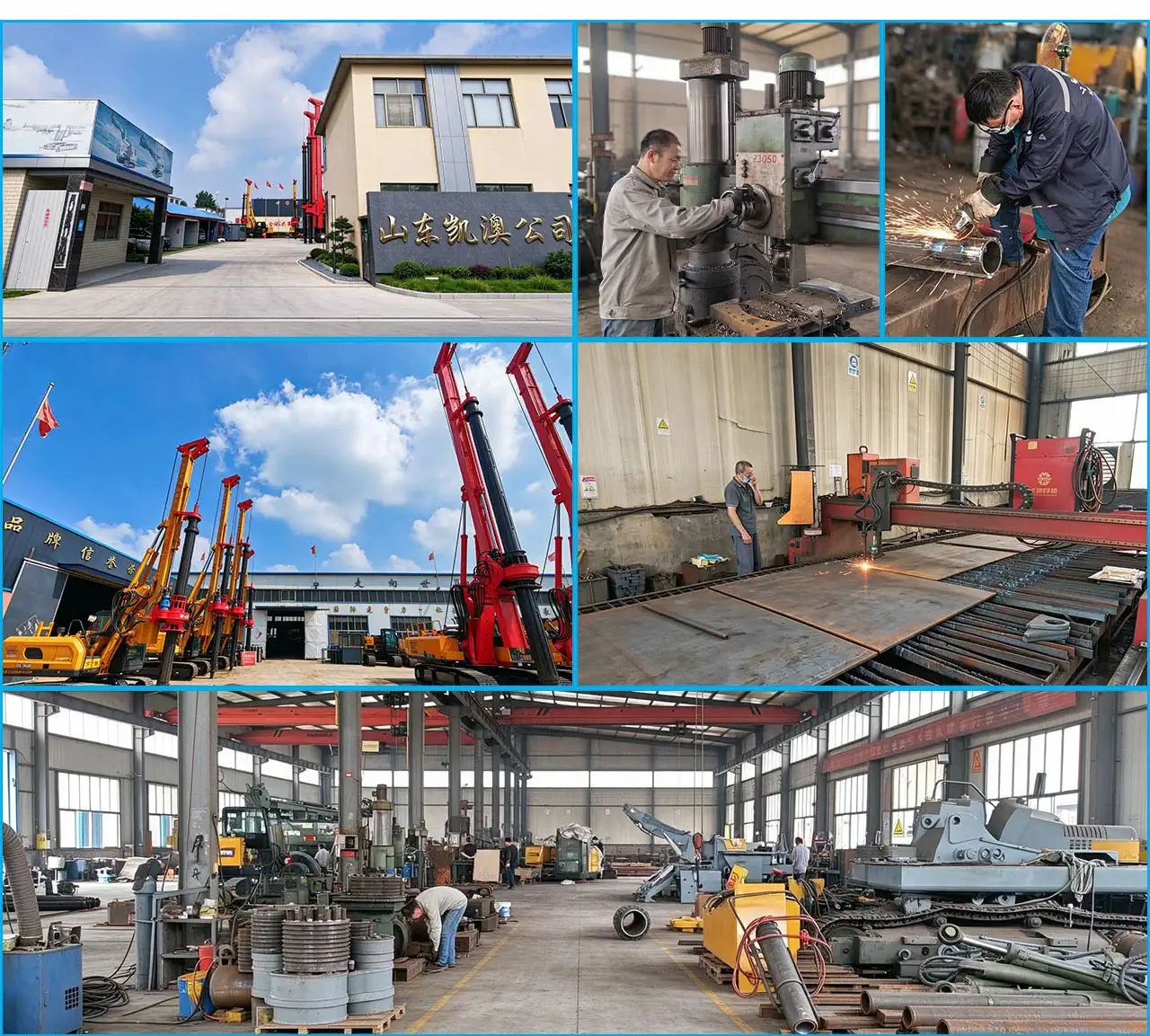
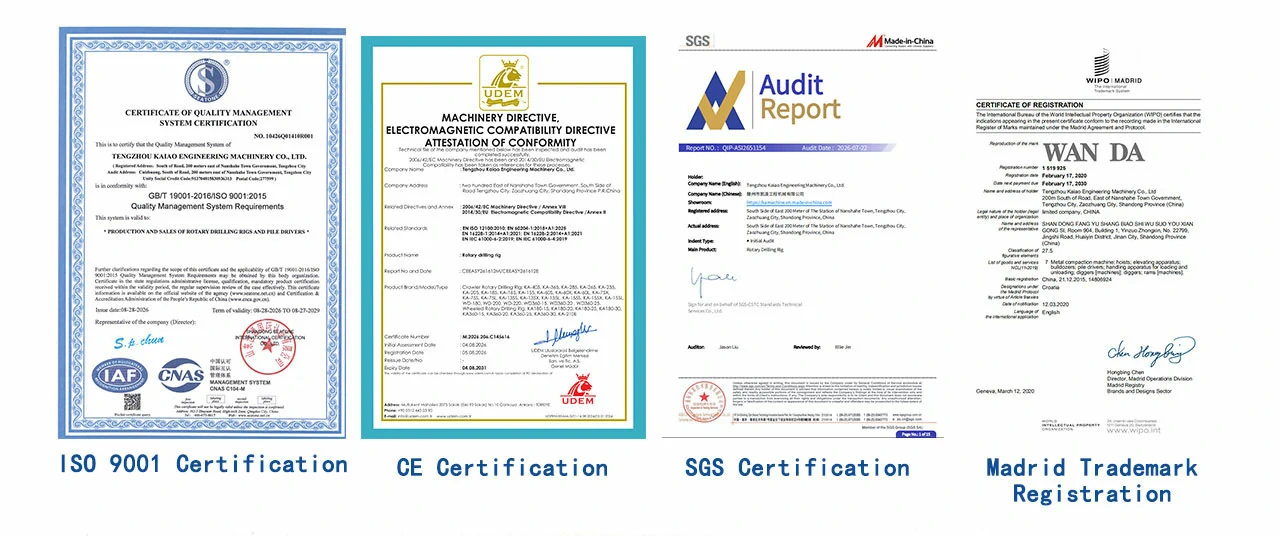
Tengzhou Kaiao Construction Machinery Co., Ltd. is an equipment manufacturer, not a piling contractor. Our machines cover two of the methods above: bored piling and ground screw installation. The project engineer still decides the pile type, diameter and depth.


Learn more about Kaiao.
Piling in construction is the installation of long columns, called piles, into the ground to carry a structure’s load to stronger soil or rock. It is used where surface soil is too weak for shallow footings. The finished group of piles and the cap that joins them is called a pile foundation.
A piling is usually one pile, or the act of installing piles, while a pile foundation is the complete system. The system includes all the piles and the pile cap or slab that ties them together and spreads the structure’s load across them.
The main types of piling by installation method are driven piles, bored piles and screw piles, with micropiles as a small-diameter variation. By load transfer, the two types are end-bearing piles and friction piles. Most real piles use a mix of both.
Bored piles are cast on site in a drilled hole, while driven piles are made off site and forced into the ground. Bored piling makes less noise and vibration but produces spoil. Driven piling displaces the soil and can be fast, but it is noisy and can be restricted near buildings.
End-bearing piles pass most of their load into a firm layer at the pile base, and friction piles pass it into the surrounding soil along the shaft. End-bearing piles suit sites with a reachable firm layer, and friction piles suit deep soft deposits.
You need a piling foundation when the soil near the surface cannot safely carry the structure. Typical cases are soft clay, loose sand, fill, a high water table, heavy loads, deep firm layers, or limits on settlement. A soil investigation and the project engineer decide the final answer.
Screw piling installs a steel shaft with helical plates by rotating it into the ground, and ground screws are a light form of it. Solar farms use ground screws to support mounting frames. In hard or rocky ground, installers often drill a pilot hole first.
Bored piles are drilled with rotary rigs that turn a drilling bucket or auger on a kelly bar. The rig lifts the loaded tool out of the hole and swings to unload it, repeating the cycle to the design depth. Casing or slurry holds the hole open in loose or wet ground.
Send the pile diameter, pile depth, ground conditions, site access and working space, and the project destination. With those details, Kaiao can tell you honestly which machine fits. Photos, drawings and a soil report make the recommendation more accurate.
Planning a bored piling or solar ground screw project? Send us the pile diameter, depth, ground conditions, site access and destination, and we will tell you honestly which machine fits.
Scan with WeChat. On a phone, save the image and scan it from your album.
Send us your project details and we will reply with a recommendation and a quotation.
Send an Email